
Hand surgery is a specialized medical procedure designed to repair damage to bones, tendons, nerves, or skin in the hand and wrist. It can improve strength, flexibility, and overall function. While many people worry about hand surgery risks, it’s important to know that modern techniques have made these procedures safer and more effective than ever.
Our hands are essential for almost everything we do from simple daily tasks to complex movements that require precision and control. When injuries, medical conditions, or deformities affect hand function, surgery can help restore both movement and comfort.
Equally important is understanding hand surgery recovery, as proper healing plays a major role in achieving the best results. With the right care and guidance, most patients are able to return to their normal routines over time.
Is Hand Surgery a Big Deal?
Whether hand surgery is considered a “big deal” depends on the type of procedure being performed. Some surgeries are minor and done on an outpatient basis, while others may be more complex and require detailed planning.
Even though the idea of surgery can feel overwhelming, many procedures are routine and performed successfully every day. Doctors carefully evaluate each case to minimize hand surgery risks and ensure the procedure is appropriate for the patient.
Recovery also varies depending on the complexity of the surgery. In most cases, hand surgery recovery involves rest, gradual movement, and sometimes physical therapy to restore strength and flexibility.

Why Would Someone Need Surgery on Their Hand?
There are several reasons why a person might require hand surgery. These procedures are not just about appearance they are often necessary to restore function and reduce pain.
Common reasons include:
- Injuries such as fractures, cuts, or tendon damage
- Nerve conditions like carpal tunnel syndrome
- Arthritis causing joint pain and stiffness
- Congenital conditions present from birth
- Infections or tumors affecting hand tissues
In such cases, surgery helps improve movement, reduce discomfort, and enhance overall quality of life. Understanding both hand surgery risks and hand surgery recovery helps patients prepare mentally and physically for the process.
How Risky Is Hand Surgery?
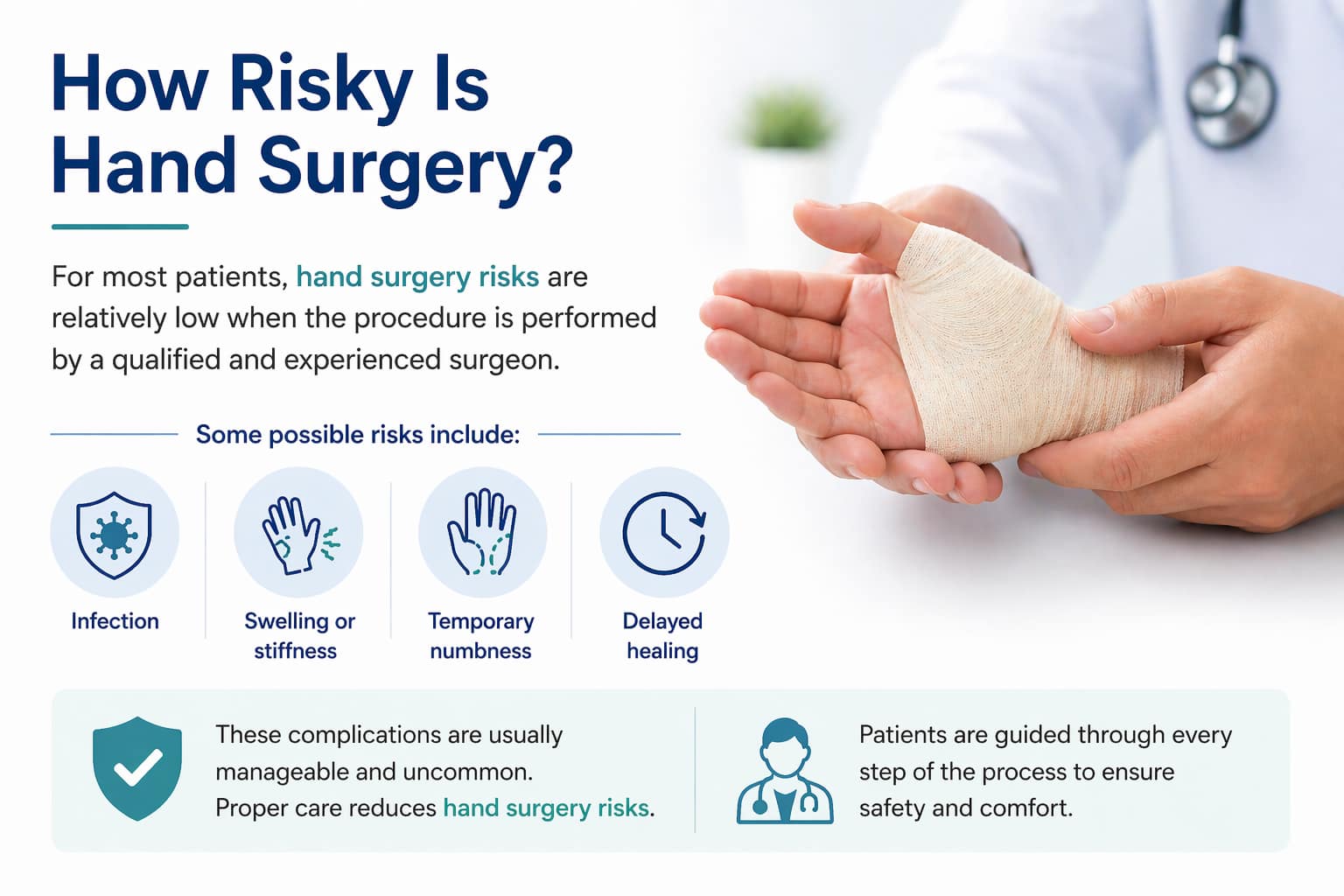
Like any medical procedure, hand surgery does involve some level of risk. However, for most patients, hand surgery risks are relatively low when the procedure is performed by a qualified and experienced surgeon.
Some possible risks include:
- Infection
- Swelling or stiffness
- Temporary numbness
- Delayed healing
These complications are usually manageable and uncommon. Careful planning, proper surgical techniques, and following medical advice significantly reduce hand surgery risks.
Patients are also guided through every step of the process to ensure safety and comfort.
Understanding Hand Surgery Recovery
The success of the procedure doesn’t end in the operating room—it continues through the healing phase. Hand surgery recovery is a gradual process that requires patience and consistency.
Here’s what patients can generally expect:
- Initial phase: Rest, bandaging, and limited movement
- Early recovery: Reduction in swelling and pain
- Rehabilitation phase: Exercises or therapy to regain strength
- Full recovery: Return to normal function over time
Following your doctor’s instructions is key to a smooth hand surgery recovery. Avoiding strain, attending follow-up appointments, and practicing recommended exercises can greatly improve outcomes.
Tips for a Smooth Recovery
To make hand surgery recovery easier and more effective, consider these tips:
- Keep the hand elevated to reduce swelling
- Follow all medication and care instructions
- Avoid heavy activities during early healing
- Attend physiotherapy sessions if recommended
- Be patient with the healing process
These steps not only support faster healing but also help reduce potential hand surgery risks during recovery.

Final Thoughts
Hand surgery plays a crucial role in restoring function, reducing pain, and improving quality of life. While concerns about hand surgery risks are natural, modern medical advancements have made these procedures safer and more reliable.
Understanding the importance of hand surgery recovery helps set realistic expectations and ensures better long-term results. With proper care, expert guidance, and a positive approach, most patients experience significant improvement and return to their daily activities with confidence.
FAQs
1. What does hand surgery treat?
It treats injuries, nerve issues, arthritis, and other hand-related conditions.
2. Is hand surgery painful?
Some discomfort is expected, but it is manageable and temporary.
3. How long does hand surgery recovery take?
Recovery time varies but typically ranges from a few weeks to a few months.
4. Are hand surgery risks high?
No, risks are generally low when performed by experienced surgeons.
5. Can I use my hand normally after surgery?
Yes, most patients regain normal function with proper recovery and care.