
Hair loss can affect confidence in subtle but real ways, which is why many people explore solutions that offer natural, long-term results. A hair transplant is one of the most effective options available today. But before deciding, it’s important to understand what actually happens during the hair transplant procedure and what the hair transplant recovery looks like.
In simple terms, a hair transplant involves moving healthy hair follicles from one part of your scalp (usually the back or sides) to areas where hair is thinning or missing. The goal is to restore natural hair growth in a way that blends seamlessly with your existing hair.
What Happens During the Hair Transplant Procedure?
The hair transplant procedure is carefully planned and performed by a specialist to ensure natural-looking results. While techniques may vary, the overall process follows a structured approach.
Here’s what typically happens:
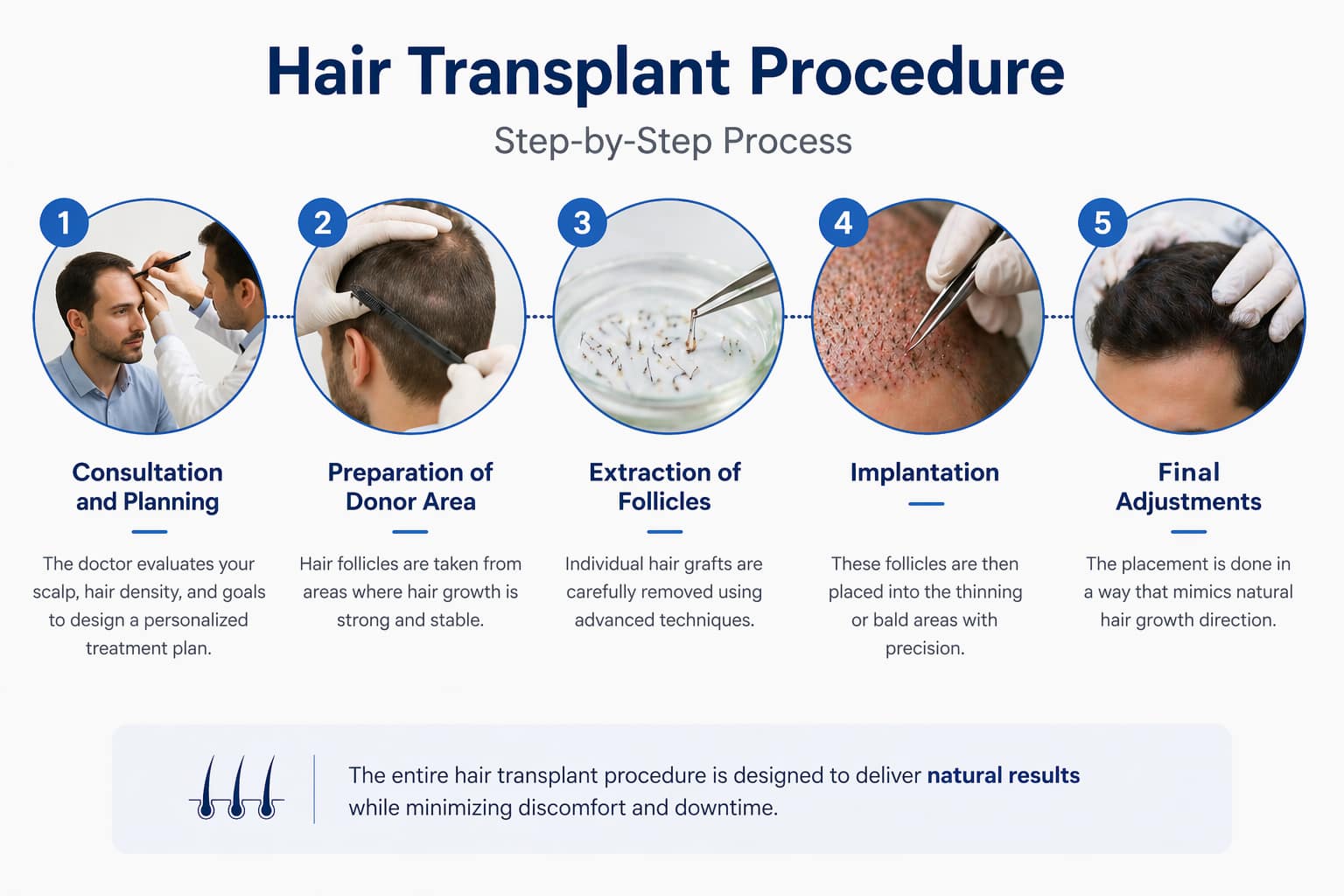
- Consultation and planning
The doctor evaluates your scalp, hair density, and goals to design a personalized treatment plan. - Preparation of donor area
Hair follicles are taken from areas where hair growth is strong and stable. - Extraction of follicles
Individual hair grafts are carefully removed using advanced techniques. - Implantation
These follicles are then placed into the thinning or bald areas with precision. - Final adjustments
The placement is done in a way that mimics natural hair growth direction.
The entire hair transplant procedure is designed to deliver natural results while minimizing discomfort and downtime.
Is a Hair Transplant a Painful Procedure?
This is one of the most common concerns and honestly, it’s less uncomfortable than most people expect. During the hair transplant procedure, local anesthesia is used, so you won’t feel pain while the surgery is being performed.
After the procedure, mild sensations may include:
- Slight soreness or tightness
- Minor swelling in the treated areas
- Temporary sensitivity
Overall, the discomfort is manageable and usually short-lived. Proper hair transplant recovery care helps reduce these sensations quickly.
How Painful Is a Hair Transplant?
When it comes to hair transplant recovery, pain is generally minimal. Most patients describe it as mild discomfort rather than actual pain.
In the first few days:
- You may feel slight tenderness
- The scalp might feel tight or sensitive
- Small scabs may form around the transplanted areas
These are all part of the normal hair transplant recovery process and gradually improve within a week or two.
Is It Hard to Sleep After a Hair Transplant?
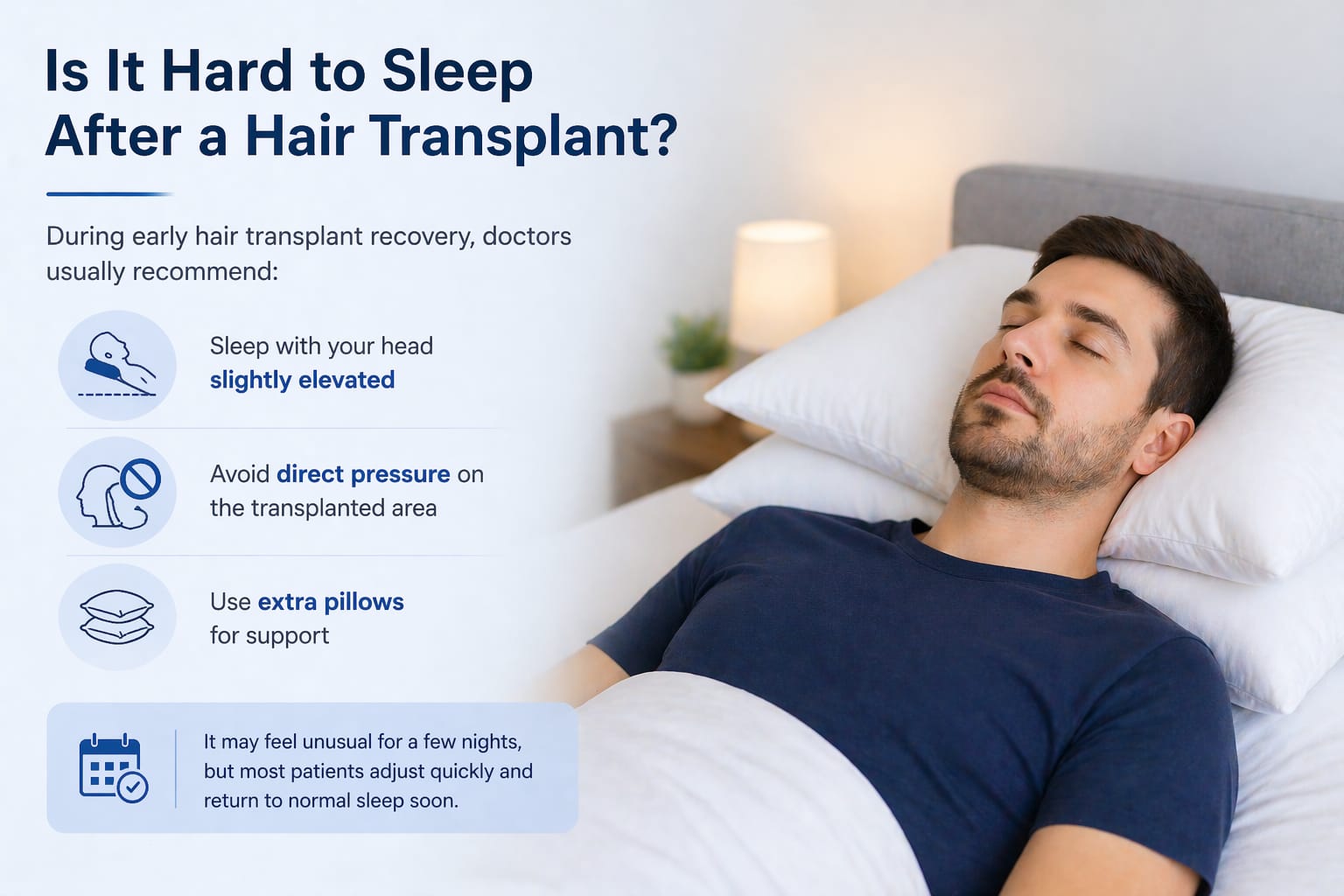
Sleeping after the procedure can feel a bit different initially, mainly because you need to protect the treated area. During early hair transplant recovery, doctors usually recommend:
- Sleeping with your head slightly elevated
- Avoiding direct pressure on the transplanted area
- Using extra pillows for support
While it may feel unusual for a few nights, most patients adjust quickly and return to normal sleeping patterns within a short time.
What Happens 10 Years After a Hair Transplant?
One of the biggest advantages of a well-done hair transplant procedure is its long-term effectiveness. The transplanted hair is typically permanent because it comes from areas resistant to hair loss.
After 10 years:
- The transplanted hair usually continues to grow naturally
- Results remain stable with proper care
- Some natural aging-related hair thinning may still occur
Maintaining overall hair health plays a key role in preserving long-term results after the hair transplant procedure.
How Long Will a Hair Transplant Last?
A successful hair transplant procedure is considered a long-lasting solution. In many cases, the results are permanent because the transplanted follicles adapt to their new location.
However, factors that influence longevity include:
- Genetics
- Lifestyle and health
- Hair care routine
- Natural aging process
With proper hair transplant recovery and ongoing care, most patients enjoy results that last for many years.
Understanding Hair Transplant Recovery
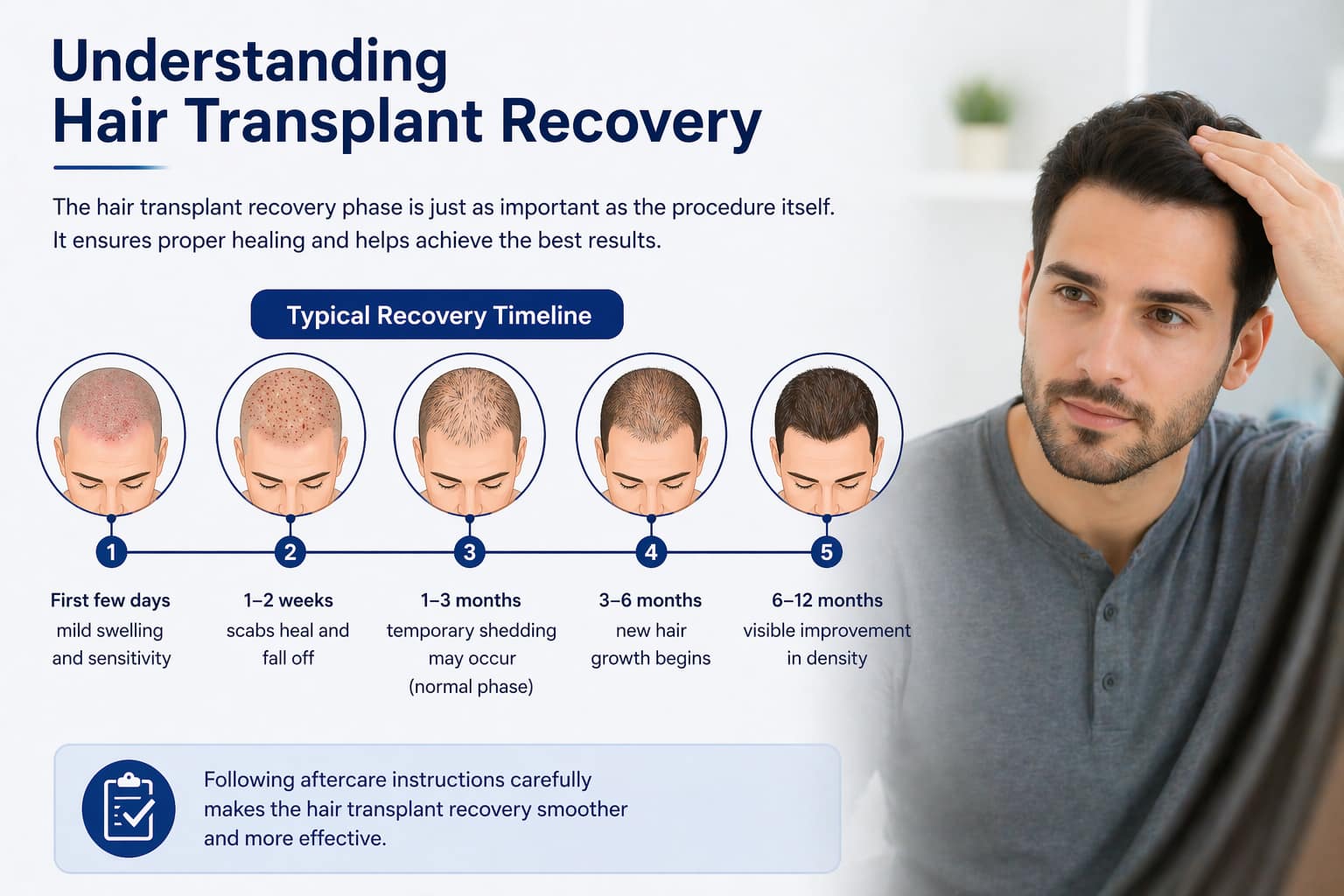
The hair transplant recovery phase is just as important as the procedure itself. It ensures proper healing and helps achieve the best results.
Typical recovery timeline:
- First few days: mild swelling and sensitivity
- 1–2 weeks: scabs heal and fall off
- 1–3 months: temporary shedding may occur (normal phase)
- 3–6 months: new hair growth begins
- 6–12 months: visible improvement in density
Following aftercare instructions carefully makes the hair transplant recovery smoother and more effective.
Final Thoughts
A hair transplant is a well-established and reliable solution for hair loss. Understanding the hair transplant procedure and knowing what to expect during hair transplant recovery can help you feel more confident about the process.
With modern techniques, minimal discomfort, and long-lasting results, it has become a preferred choice for many people looking to restore their hair naturally.
If you’re considering it, the best step is to consult a qualified specialist who can guide you based on your specific needs and goals.
FAQs
1. What is done in a hair transplant procedure?
Hair follicles are taken from a donor area and implanted into thinning or bald areas.
2. Is hair transplant recovery painful?
No, it usually involves mild discomfort that improves quickly.
3. How long does it take to recover?
Initial healing takes a few weeks, while full results appear over several months.
4. Are results permanent?
Yes, in most cases, the transplanted hair lasts for many years.
5. Can I return to normal routine quickly?
Yes, most people resume normal activities within a few days.