
Noticing changes in your chest can be confusing, especially when you’re unsure whether it’s just fat or something else. Many men experience this at some point, and the concern is completely valid. Understanding gyno symptoms in men and knowing how a proper gynecomastia examination works can help you figure out what’s really going on.
Gynecomastia is a condition where glandular breast tissue increases in males, often due to hormonal changes. While it’s usually harmless, identifying it correctly is important so you can decide whether any treatment or lifestyle changes are needed.
How Do You Confirm If You Have Gynecomastia?
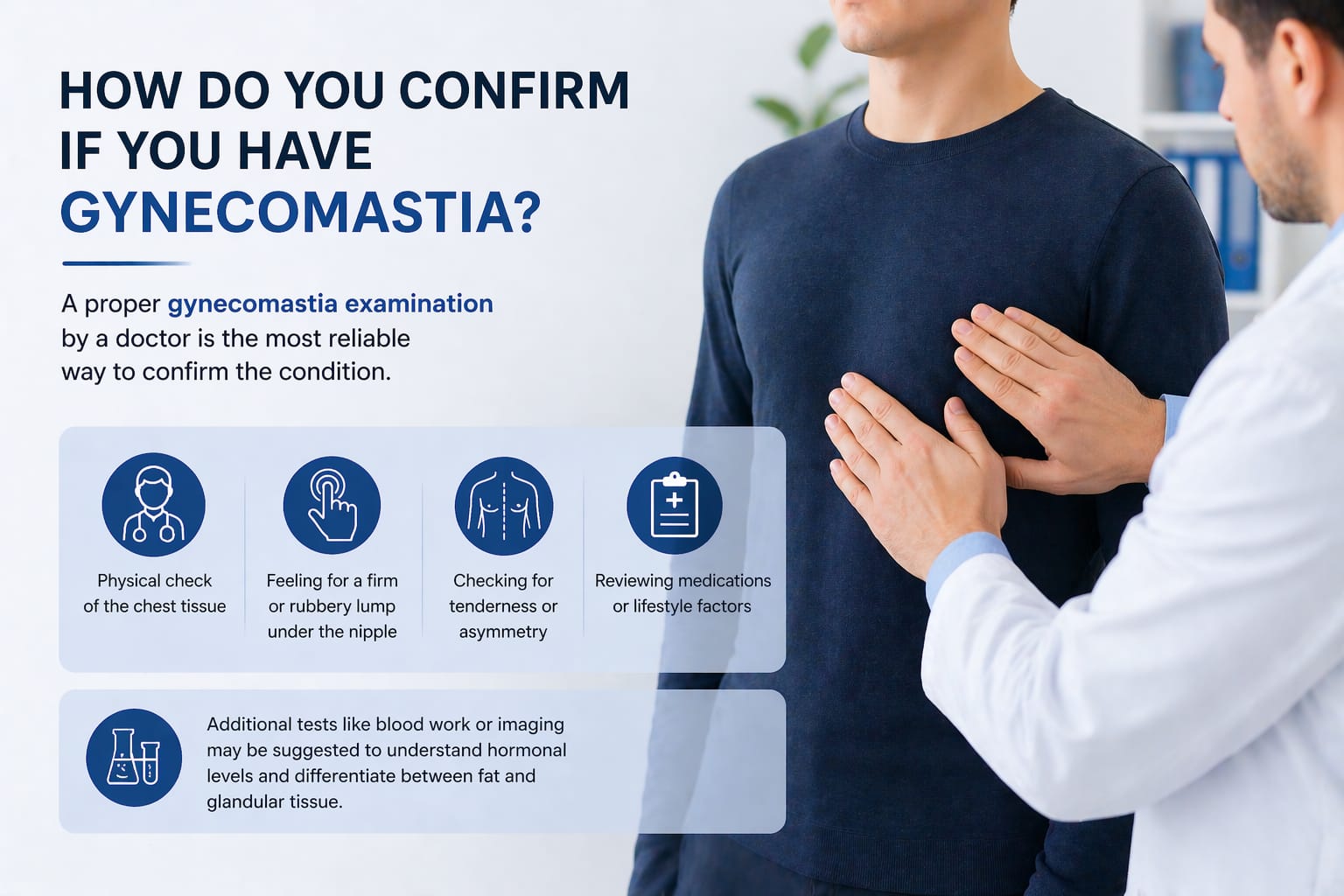
The most reliable way to confirm the condition is through a proper gynecomastia examination. This typically involves a doctor evaluating the chest area and understanding your medical history.
A standard gynecomastia examination may include:
- Physical check of the chest tissue
- Feeling for a firm or rubbery lump under the nipple
- Checking for tenderness or asymmetry
- Reviewing medications or lifestyle factors
In some cases, additional tests like blood work or imaging may be suggested to understand hormonal levels. This process helps differentiate between fat and actual glandular tissue, which is key in diagnosing gynecomastia.
What Are the First Signs of Gynecomastia?
Recognizing early gyno symptoms in men can make a big difference. In the initial stages, the changes are usually subtle but noticeable if you pay attention.
Common early signs include:
- Slight swelling around the nipple area
- Puffy or protruding nipples
- Tenderness or mild discomfort
- A small, firm lump beneath the skin
These gyno symptoms in men may appear gradually and are often more noticeable during puberty or periods of hormonal change.
Am I Just Fat or Is It Gynecomastia?
This is one of the most common questions and honestly, it’s not always easy to tell at first. Both chest fat and gynecomastia can look similar, but there are key differences.
Here’s a simple way to understand:
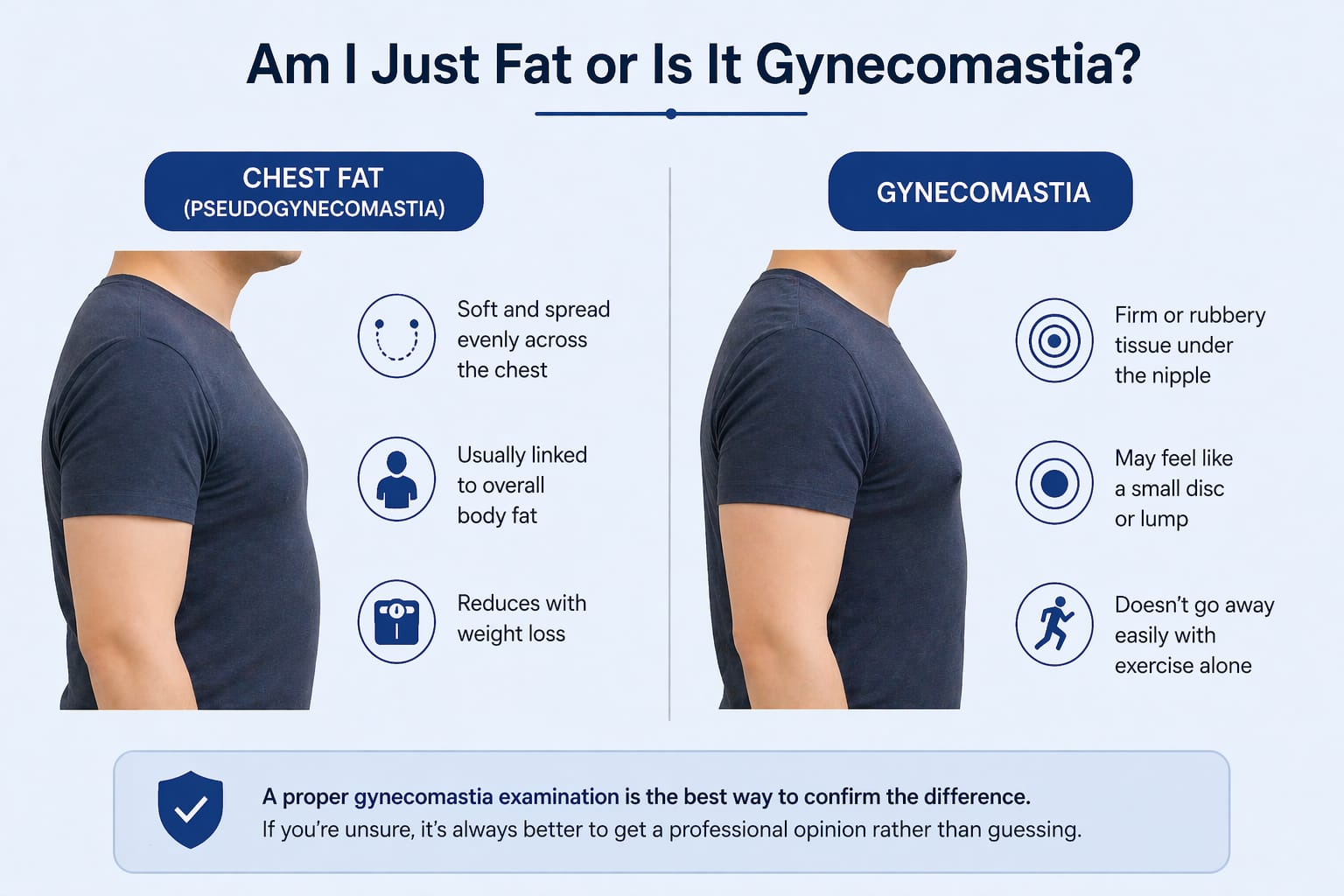
- Chest fat (pseudogynecomastia):
- Soft and spread evenly across the chest
- Usually linked to overall body fat
- Reduces with weight loss
- Gynecomastia:
- Firm or rubbery tissue under the nipple
- May feel like a small disc or lump
- Doesn’t go away easily with exercise alone
A proper gynecomastia examination is the best way to confirm the difference. If you’re unsure, it’s always better to get a professional opinion rather than guessing.
How to 100% Know If You Have Gynecomastia?
While online information can help, a 100% accurate diagnosis comes from a medical professional. A thorough gynecomastia examination ensures that the condition is correctly identified.
To be completely sure:
- Visit a qualified doctor or specialist
- Get a physical examination done
- Follow through with any recommended tests
- Discuss your symptoms openly
Self-checks can give you an idea, but only a proper gynecomastia examination can confirm whether the tissue growth is due to gynecomastia or another cause.
When Should You Be Concerned?
Most cases are not serious, but you should consider a medical consultation if:
- The swelling is persistent or worsening
- There is significant pain or discomfort
- Only one side is affected noticeably
- There are unusual changes over time
Recognizing these gyno symptoms in men early allows for timely guidance and better management.

Final Thoughts
Understanding your body is the first step toward clarity and confidence. The presence of gyno symptoms in men doesn’t always mean something serious, but it’s important to know what you’re dealing with.
A proper gynecomastia examination removes uncertainty and helps you take the right next steps whether that’s reassurance, lifestyle changes, or medical treatment.
If you’re noticing changes, don’t overthink it. Get it checked, understand it properly, and move forward with confidence.
FAQs
1. How do I know if I have gynecomastia or fat?
Gynecomastia involves firm tissue under the nipple, while fat is soft and spread out.
2. What are common gyno symptoms in men?
Swelling, tenderness, puffy nipples, and a lump under the nipple are common signs.
3. Can I confirm gynecomastia at home?
You can get an idea, but a proper gynecomastia examination is needed for confirmation.
4. Is gynecomastia dangerous?
Most cases are harmless, but it’s best to get it evaluated.
5. Should I see a doctor for chest changes?
Yes, especially if the symptoms persist or worsen over time.