
Gynecomastia is a common condition that leads to the enlargement of breast tissue in males. While it can feel concerning, it’s important to understand that the gynecomastia condition is usually linked to natural changes in the body and is often manageable.
The main cause of gynecomastia is a hormonal imbalance, specifically when estrogen levels (the hormone responsible for breast tissue growth) are higher than testosterone levels. This imbalance can occur at different stages of life and may be temporary or persistent depending on the underlying reason.
Understanding the causes and gynecomastia stages helps in identifying the severity of the condition and choosing the right approach for treatment or management.
Common Causes of Gynecomastia
The gynecomastia condition can develop due to several factors, including:
- Puberty
Hormonal fluctuations during teenage years are one of the most common causes. - Aging
Hormone levels naturally change as men grow older. - Medications
Certain drugs can affect hormone balance. - Lifestyle factors
Alcohol, poor diet, or lack of exercise may contribute. - Underlying health conditions
Issues related to hormones or metabolism can also play a role.
In many cases, the condition improves on its own, especially when it occurs during puberty.

How Can I Stop Gynecomastia from Growing?
Managing the gynecomastia condition early can help prevent it from progressing. While not all cases can be completely stopped without medical intervention, certain steps may help:
- Maintain a healthy weight
- Avoid substances that affect hormones
- Follow a balanced diet
- Stay physically active
- Consult a doctor if symptoms worsen
Understanding your body and monitoring changes across different gynecomastia stages can help you take timely action.
What Does Stage 1 Gynecomastia Look Like?
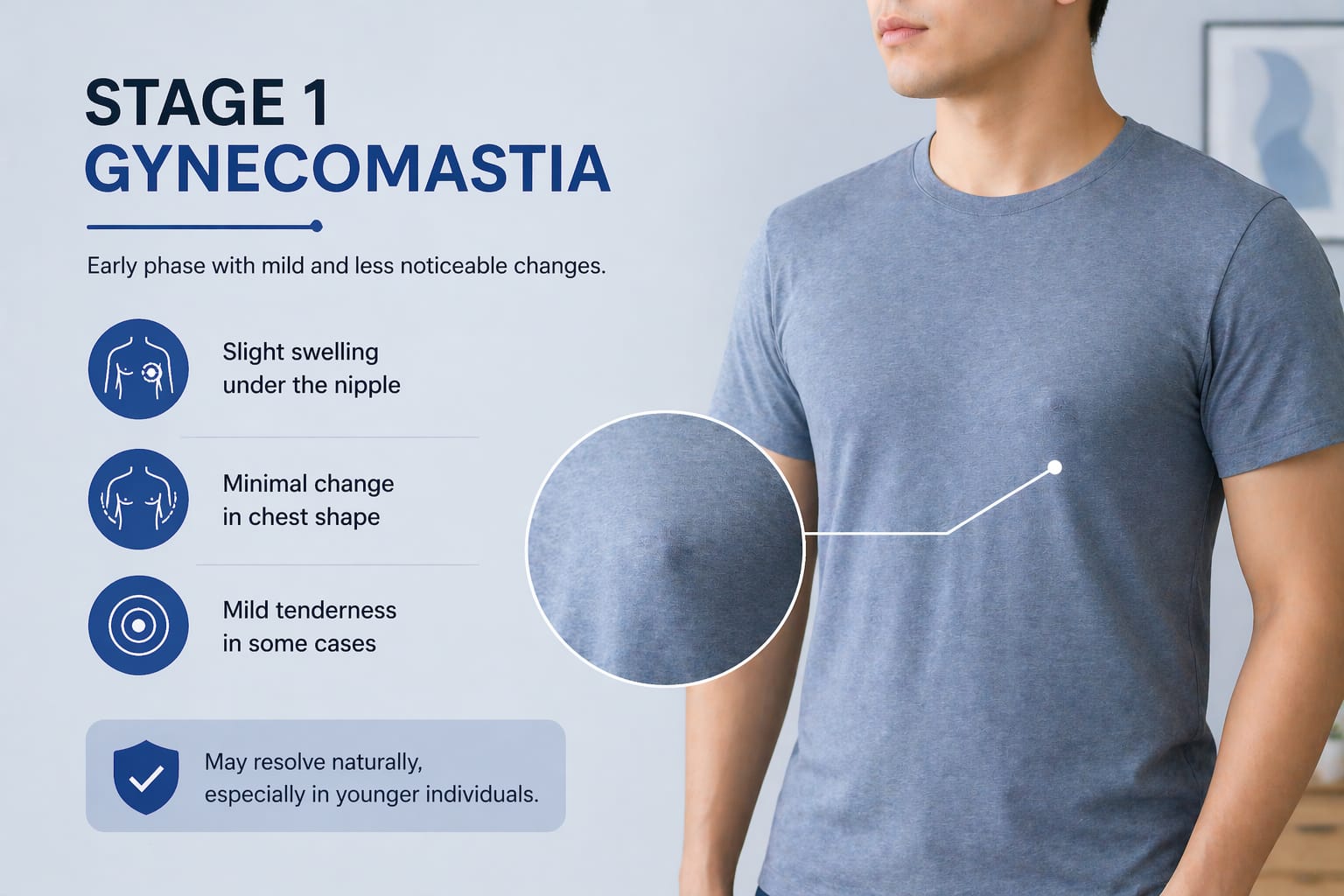
In the early phase, or stage 1, the changes are usually mild and may not be very noticeable. This stage is one of the initial gynecomastia stages and is often easier to manage.
Typical features include:
- Slight swelling under the nipple
- Minimal change in chest shape
- Mild tenderness in some cases
At this stage, the gynecomastia condition may resolve naturally, especially in younger individuals.
Is Gyno at 18 Normal?
Yes, experiencing the gynecomastia condition at 18 is quite common. During late teenage years, the body is still adjusting hormonally, which can lead to temporary breast tissue growth.
In most cases:
- It is not a serious issue
- It may resolve on its own within months or a couple of years
- Medical evaluation is only needed if it persists or worsens
Understanding how gynecomastia behaves during different gynecomastia stages helps reduce unnecessary worry and encourages informed decisions.
How Do I Stop Gynecomastia?
Stopping the gynecomastia condition depends on its cause and stage. For mild cases, lifestyle changes may help, while more persistent cases might require medical guidance.
Possible approaches include:
- Weight management
- Hormonal evaluation
- Medications (if prescribed)
- Surgical options in advanced cases
The right approach depends on where you fall within the gynecomastia stages and how the condition is affecting your daily life.
What Does Stage 4 Gynecomastia Look Like?
Stage 4 is considered one of the more advanced gynecomastia stages. At this level, the changes are more noticeable and may require medical attention.
Common signs include:
- Significant enlargement of breast tissue
- Sagging or excess skin
- More defined chest shape changes
At this stage, the gynecomastia condition is unlikely to resolve on its own, and treatment options are usually recommended for long-term improvement.

Final Thoughts
The gynecomastia condition is more common than many people realize, and in most cases, it is not harmful. Understanding its causes and recognizing different gynecomastia stages can help you respond appropriately and seek help when needed.
Whether it’s a temporary hormonal change or a more persistent condition, early awareness and the right approach can make a significant difference. With proper care, guidance, and patience, most individuals can manage or treat gynecomastia effectively.
FAQs
1. What is the main cause of gynecomastia?
Hormonal imbalance between estrogen and testosterone is the primary cause.
2. Is gynecomastia permanent?
Not always. Many cases, especially during puberty, are temporary.
3. Can exercise reduce gynecomastia?
Exercise helps with fat reduction but may not remove glandular tissue.
4. What are gynecomastia stages?
They range from mild swelling (stage 1) to significant enlargement (stage 4).
5. When should I see a doctor?
If the condition persists, worsens, or causes discomfort, medical advice is recommended.