
Fat transfer has become a popular choice for people looking for natural looking enhancements without synthetic materials. One of the most common questions people ask is how long the results actually last. The good news is that fat transfer results can be long-lasting and, in many cases, even permanent.
Since the procedure uses your own fat, the body accepts it more naturally compared to other treatments. However, not all transferred fat survives some of it is reabsorbed by the body in the initial months. The fat that successfully integrates into the new area becomes a stable part of your body, contributing to lasting fat transfer results.
At the same time, understanding fat transfer safety is equally important. When done by a skilled professional with proper care, the procedure is generally safe and reliable.

How Long Do Fat Transfers Work?
The longevity of fat transfer results depends on several factors, including the technique used, the area treated, and your lifestyle. Typically, a portion of the transferred fat settles permanently within the first few months after the procedure.
Here’s what you can expect:
- First 1–3 months: Some fat is naturally reabsorbed
- After 3–6 months: Remaining fat stabilizes
- Long term: Results can last for years or even permanently
Once the fat establishes a blood supply, it behaves like normal fat in your body. This means your fat transfer results can change with weight gain or loss. Maintaining a stable lifestyle helps preserve the outcome.
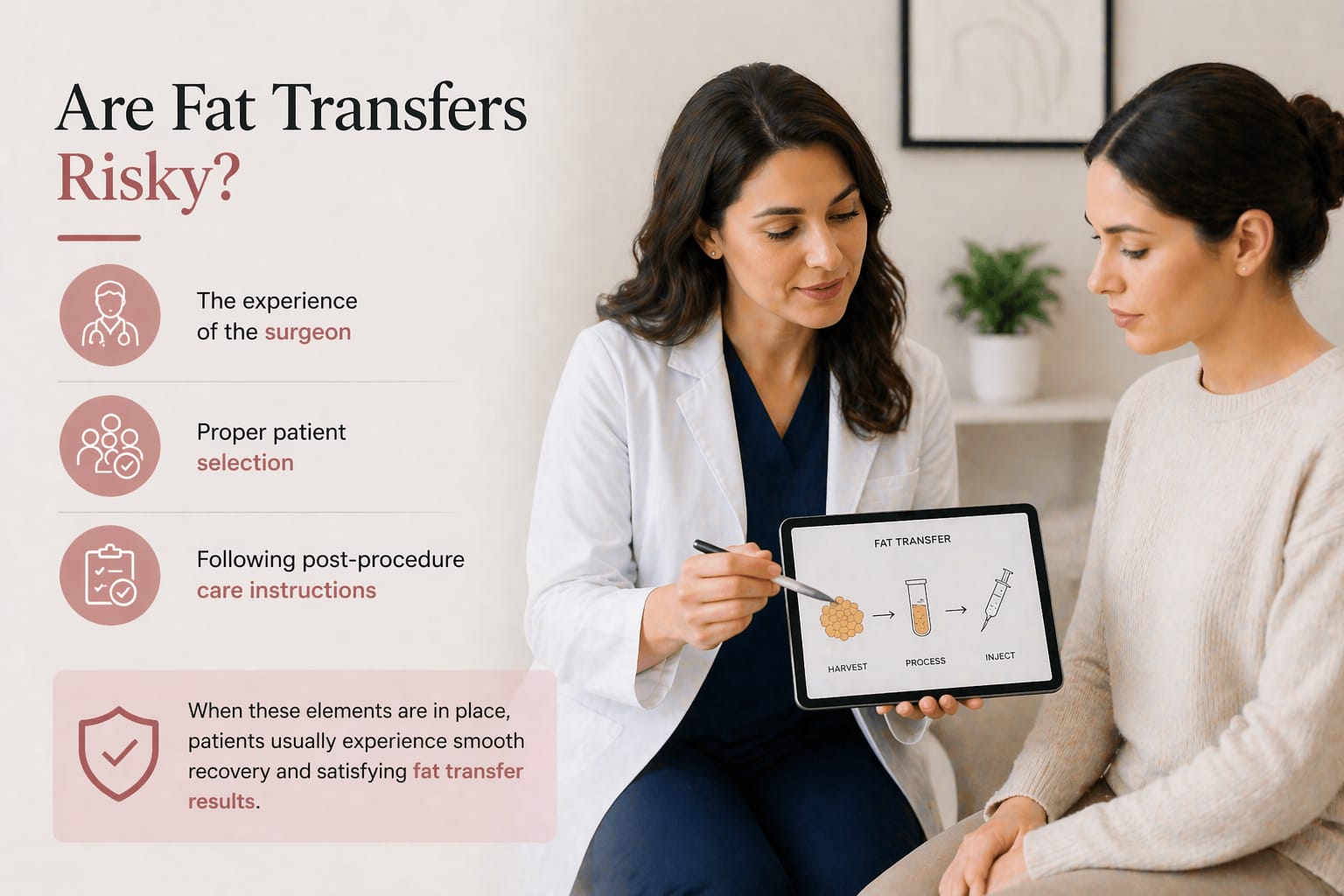
Are Fat Transfers Risky?
This is a common concern, but in reality, fat transfers are not considered highly risky. Advances in techniques have significantly improved both outcomes and fat transfer safety.
The key factors that influence risk include:
- The experience of the surgeon
- Proper patient selection
- Following post-procedure care instructions
When these elements are in place, patients usually experience smooth recovery and satisfying fat transfer results.
Is Fat Transfer Safer?
Many people compare fat transfer with implants or synthetic fillers. In many cases, fat transfer is considered a safer option because it uses natural tissue from your own body. This greatly enhances fat transfer safety and reduces the risk of rejection or complications.
Additionally, the results often look and feel more natural. This is why many individuals prefer this method for facial rejuvenation, body contouring, or volume enhancement.
However, safer does not mean risk free. Choosing a qualified professional and following proper guidelines remains essential for achieving optimal fat transfer results.
Factors That Affect Fat Transfer Results
The success and longevity of fat transfer results depend on multiple factors:
- The technique used during the procedure
- The area where fat is transferred
- Your body’s ability to retain fat cells
- Lifestyle habits like diet and exercise
Patients who maintain a stable weight and follow aftercare instructions tend to enjoy longer-lasting fat transfer results.

Final Thoughts
Fat transfer offers a natural and effective way to enhance your appearance with long lasting benefits. The durability of fat transfer results makes it an attractive option for those looking for subtle yet noticeable improvements.
Equally important is understanding fat transfer safety, which ensures that the procedure is performed under the right conditions. With proper planning, expert guidance, and good aftercare, most patients experience smooth recovery and satisfying outcomes.
While some fat loss is expected initially, the fat that remains becomes a permanent part of your body. With a healthy lifestyle and realistic expectations, fat transfer can provide results that last for years while maintaining a natural look and feel.
FAQs
1. How long do fat transfer results last?
They can last for years or even permanently once the fat stabilizes.
2. Is fat transfer safe?
Yes, it is generally safe when performed by an experienced professional.
3. Do fat transfer results change over time?
Yes, they can change with weight fluctuations and aging.
4. Are fat transfers risky?
They carry minimal risks when proper care and techniques are used.
5. Is fat transfer safer than implants?
In many cases, yes, because it uses your body’s own fat.