
If you’re considering a fat transfer procedure, one of the first questions that likely comes to mind is about discomfort. Understanding fat transfer pain is important because it helps you set realistic expectations before undergoing the procedure.
The good news is that most patients describe the experience as manageable rather than intense. While some level of discomfort is expected, advancements in techniques and proper care have made the process much more comfortable than many people assume. Along with this, knowing the fat transfer recovery time can help you prepare for both the procedure and the healing phase.
How Bad Does a Fat Transfer Hurt?
The level of fat transfer pain varies depending on the individual and the areas involved in the procedure. Since fat transfer typically includes liposuction to remove fat and then reinjecting it into another area, there are two parts to consider.
During the procedure, anesthesia is used, so patients do not feel pain. Afterward, some common sensations include:
- Mild to moderate soreness in the treated areas
- A feeling similar to muscle stiffness
- Swelling and slight bruising
Most patients find that the discomfort is more noticeable in the area where fat is removed rather than where it is injected. As part of the normal fat transfer recovery time, these symptoms gradually improve over the first couple of weeks.

What Are the Top 3 Most Painful Surgeries?
Many people compare fat transfer pain to other procedures to better understand what to expect. While pain levels vary, some surgeries are generally considered more intense due to their complexity and recovery demands.
Commonly mentioned among more painful procedures are:
- Major abdominal surgeries
- Joint replacement surgeries
- Spine-related surgeries
Compared to these, fat transfer is usually much less painful. Most patients describe it as discomfort rather than severe pain, especially when managed properly during the fat transfer recovery time.
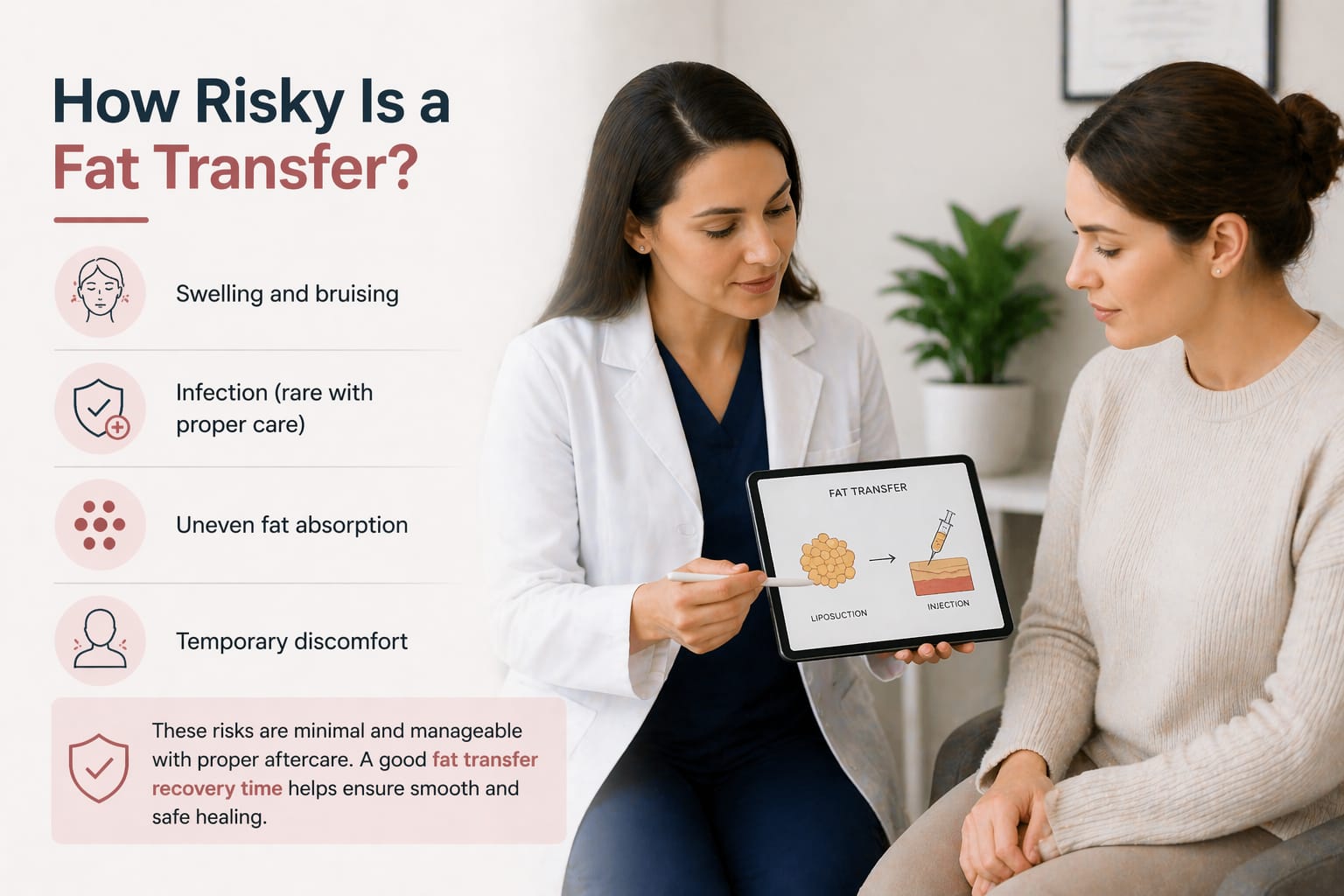
How Risky Is a Fat Transfer?
Like any medical procedure, fat transfer does involve some risks, but it is generally considered safe when performed by an experienced professional. Understanding both safety and fat transfer pain helps patients make informed decisions.
Some possible risks include:
- Swelling and bruising
- Infection (rare with proper care)
- Uneven fat absorption
- Temporary discomfort
These risks are usually minimal and manageable, especially when proper aftercare is followed. The overall fat transfer recovery time plays a significant role in minimizing complications and ensuring smooth healing.
Understanding Fat Transfer Recovery Time
The healing process is just as important as the procedure itself. The fat transfer recovery time varies from person to person, but there are general stages most patients experience.
- First few days: Mild discomfort, swelling, and rest required
- 1–2 weeks: Visible improvement and return to light activities
- 3–4 weeks: Most swelling reduces significantly
- Few months: Final results become more noticeable
Managing fat transfer pain becomes easier as recovery progresses. Following medical advice, staying hydrated, and avoiding strenuous activities can help speed up the process.
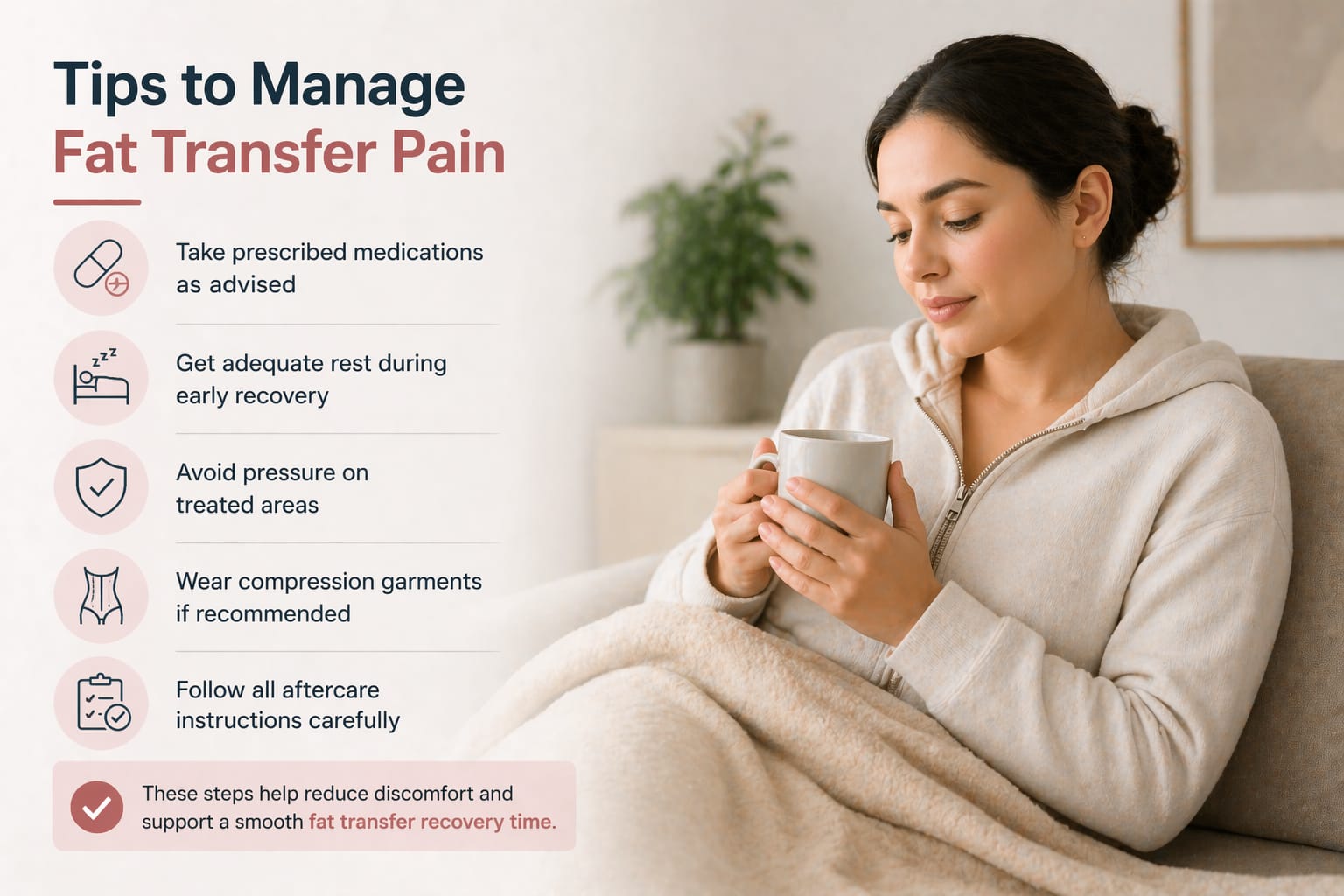
Tips to Manage Fat Transfer Pain
Although fat transfer pain is usually mild, there are simple ways to make recovery more comfortable:
- Take prescribed medications as advised
- Get adequate rest during early recovery
- Avoid pressure on treated areas
- Wear compression garments if recommended
- Follow all aftercare instructions carefully
These steps not only reduce discomfort but also improve overall outcomes during the fat transfer recovery time.
Final Thoughts
Fat transfer is a safe and effective procedure that offers natural-looking results. While fat transfer pain is a valid concern, it is generally mild and manageable for most patients.
Understanding the healing process and respecting the fat transfer recovery time allows your body to recover properly and ensures better results. With the right expectations, proper care, and guidance from a qualified professional, the experience becomes much smoother than many people anticipate.
In the end, the temporary discomfort is often outweighed by the long-term benefits, making fat transfer a popular choice for those seeking natural enhancement and improved confidence.
FAQs
1. Is fat transfer very painful?
No, most patients experience mild to moderate discomfort rather than severe pain.
2. How long does fat transfer pain last?
Discomfort usually reduces within 1–2 weeks as part of the normal healing process.
3. What is the fat transfer recovery time?
Initial recovery takes a few weeks, while full results may take a few months.
4. Is fat transfer safe?
Yes, when performed by an experienced surgeon, it is generally safe.
5. Which area hurts more in fat transfer?
The donor area (where fat is removed) usually feels more sore than the treated area.