
Burns are one of the most common types of injuries people experience in daily life. Whether it’s a minor kitchen accident or a more serious incident, understanding the causes of burn injuries can help prevent them and ensure timely burn treatment.
Burns occur when the skin or deeper tissues are damaged by heat, chemicals, electricity, radiation, or friction. Identifying the cause is the first step in providing the right care and reducing complications.
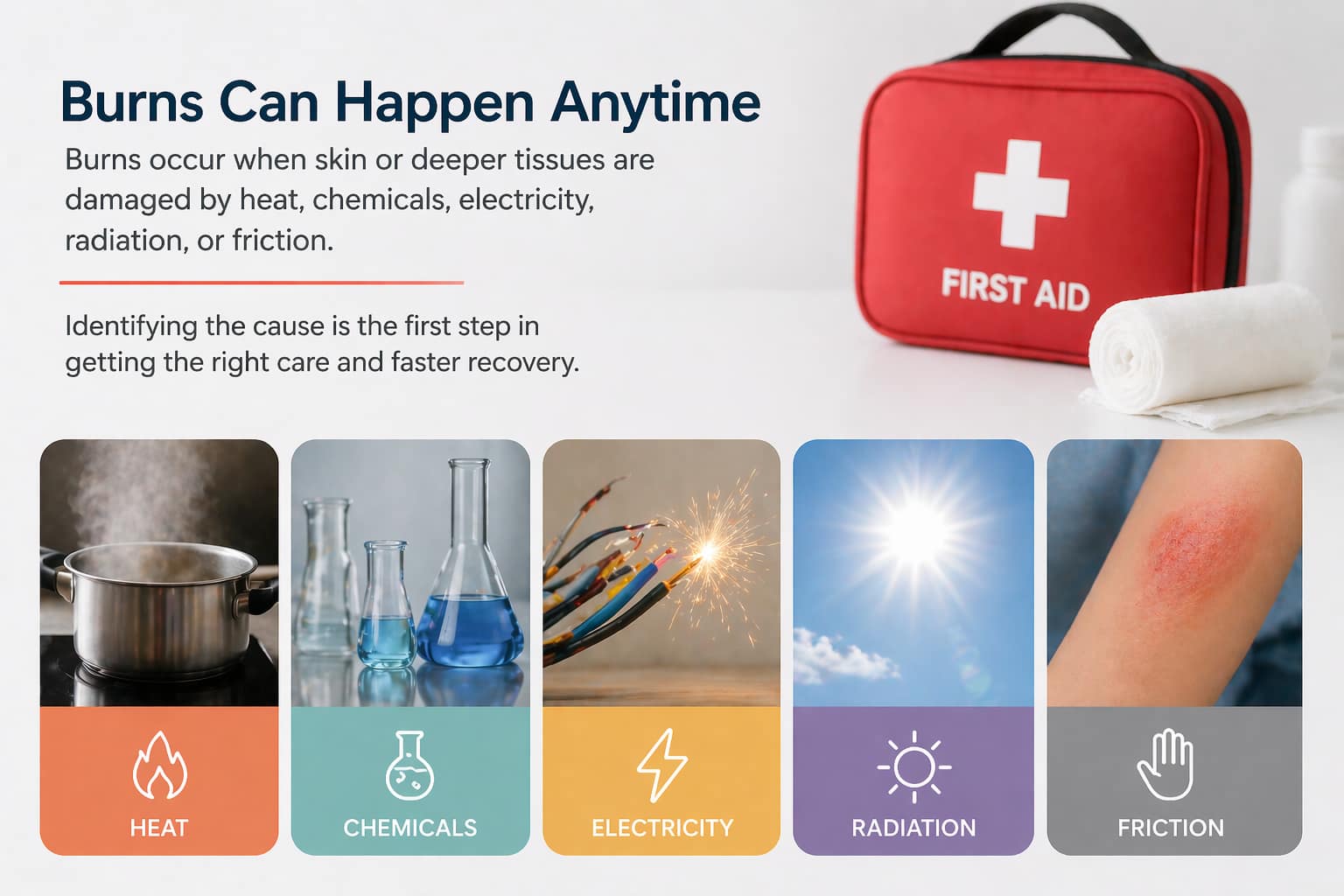
The 7 common causes of burns include:
- Thermal burns (from fire, hot liquids, steam, or hot surfaces)
- Chemical burns (from acids, cleaning agents, or industrial chemicals)
- Electrical burns (from contact with electrical currents)
- Radiation burns (from sun exposure or medical treatments)
- Friction burns (caused by skin rubbing against surfaces)
- Cold burns (from extreme cold or frostbite-like conditions)
- Scald burns (from hot liquids, especially common in households)
Understanding these causes helps in preventing burn injuries and choosing the right burn treatment approach quickly.
What Are the 5 Types of Burns?
Burns are classified based on their cause and how they affect the skin. The five main types of burn injuries are:
- Thermal burns – caused by heat sources like fire or boiling water
- Chemical burns – caused by contact with harmful chemicals
- Electrical burns – caused by electric currents passing through the body
- Radiation burns – caused by sunburn or radiation exposure
- Friction burns – caused by rubbing against rough surfaces
Each type requires a slightly different burn treatment method, so identifying the type is essential for proper care.
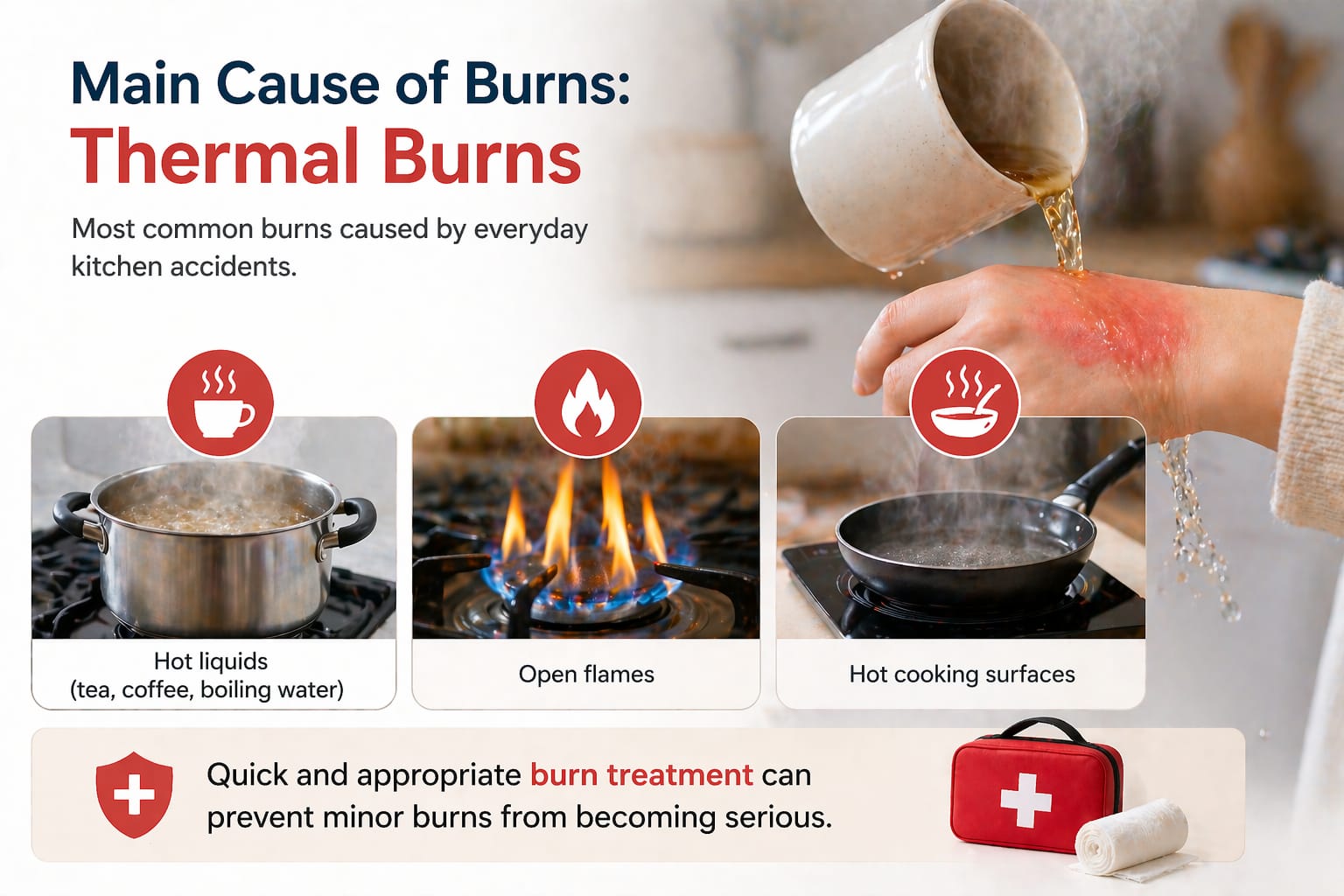
What Is the Main Cause of Burns?
Among all causes, thermal burns are the most common. These usually occur due to:
- Hot liquids (like tea, coffee, or boiling water)
- Open flames
- Hot cooking surfaces
In everyday life, kitchen accidents are a leading cause of burn injuries. Quick and appropriate burn treatment can prevent minor burns from becoming serious.
What Is a Common Burn?
The most common type of burn injuries seen in households is a scald burn, which happens when hot liquids or steam come into contact with the skin.
These burns are especially frequent in:
- Kitchens
- Bathrooms (hot water exposure)
- Workplaces involving heat or liquids
Most of these burns are mild and can be managed with basic burn treatment, such as cooling the affected area and keeping it clean.
How to Stop a Burn From Burning?
Immediate action is crucial when dealing with burn injuries. The goal is to stop the burning process and reduce damage to the skin.
Here are simple steps for initial burn treatment:
- Cool the burn under running cool (not cold) water for 10–20 minutes
- Remove tight clothing or accessories near the affected area
- Avoid applying ice directly, as it can worsen the injury
- Cover the burn with a clean, non-stick dressing
- Seek medical help for severe burns
What Are the 4 Grades of Burns?
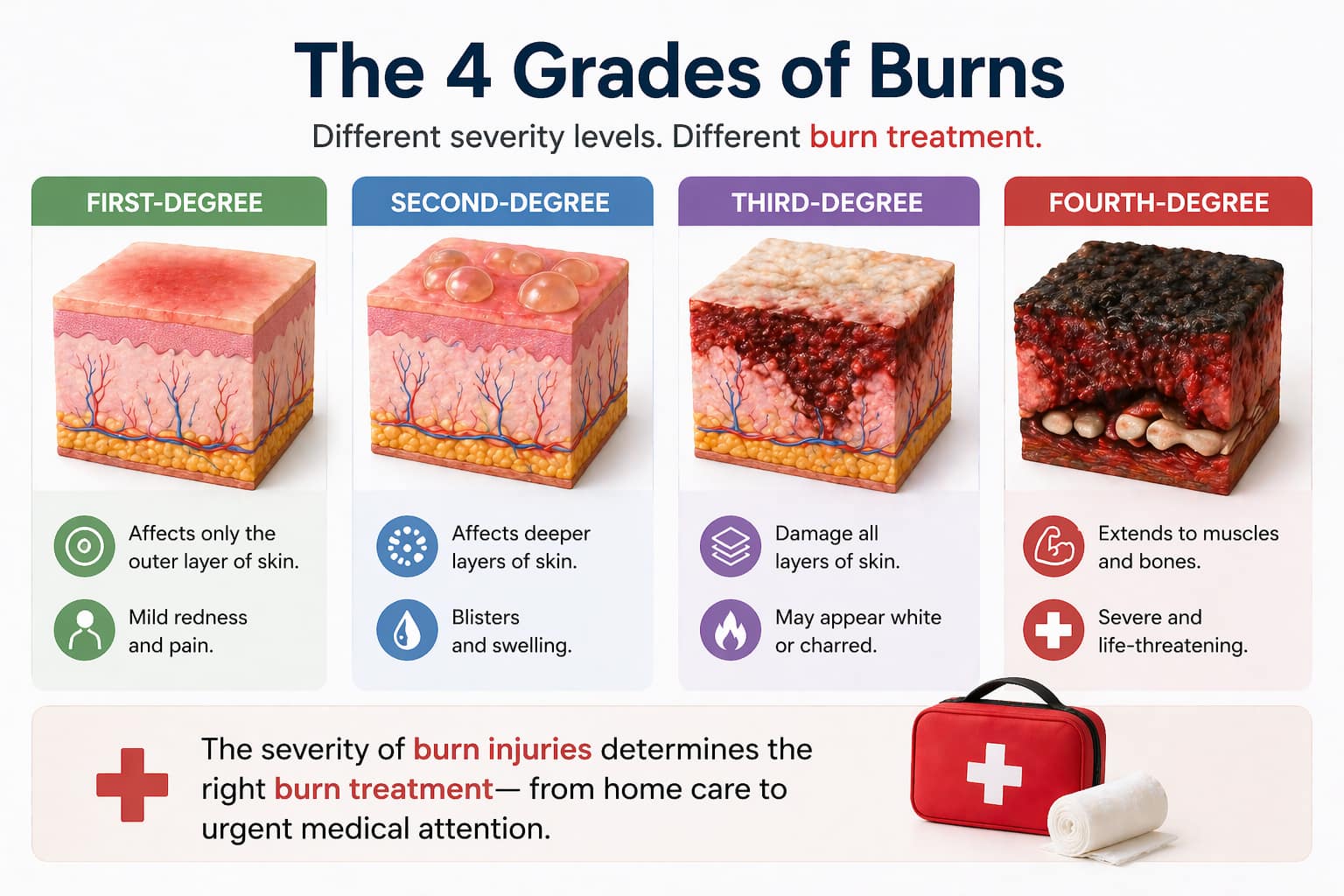
Burns are also classified based on their severity. The four grades of burn injuries include:
- First-degree burns – Affect only the outer layer of skin (mild redness and pain)
- Second-degree burns – Affect deeper layers (blisters and swelling)
- Third-degree burns – Damage all layers of skin (may appear white or charred)
- Fourth-degree burns – Extend to muscles and bones (severe and life-threatening)
The level of severity determines the type of burn treatment required, ranging from simple home care to urgent medical attention.
Final Thoughts
Burns can happen unexpectedly, but understanding their causes and types can make a big difference in how you respond. Awareness of common burn injuries helps you take preventive measures and act quickly when accidents occur.
Equally important is knowing the basics of burn treatment, as early care can reduce complications and speed up recovery. Whether it’s a minor burn at home or a more serious injury, timely action and proper care are essential.
By staying informed and prepared, you can handle burn situations more confidently and ensure better outcomes for yourself and others.
FAQs
1. What is the most common cause of burn injuries?
Thermal burns from hot liquids and fire are the most common.
2. How should I treat a minor burn?
Cool it with running water, cover it, and keep it clean.
3. Are all burn injuries serious?
No, many are minor, but severe burns require medical attention.
4. What is the first step in burn treatment?
Stop the burning process and cool the area immediately.
5. Can burns be prevented?
Yes, by following safety measures at home and work.