
Breast augmentation is a widely chosen cosmetic procedure designed to enhance the size and shape of the breasts. People consider it for many reasons whether it’s to improve body proportions, restore volume after weight loss, or regain confidence.
While the results can be highly satisfying, it’s natural to have questions about what the procedure involves, as well as concerns around breast augmentation risks and breast augmentation pain. Understanding the process helps you feel more prepared and confident before making a decision.
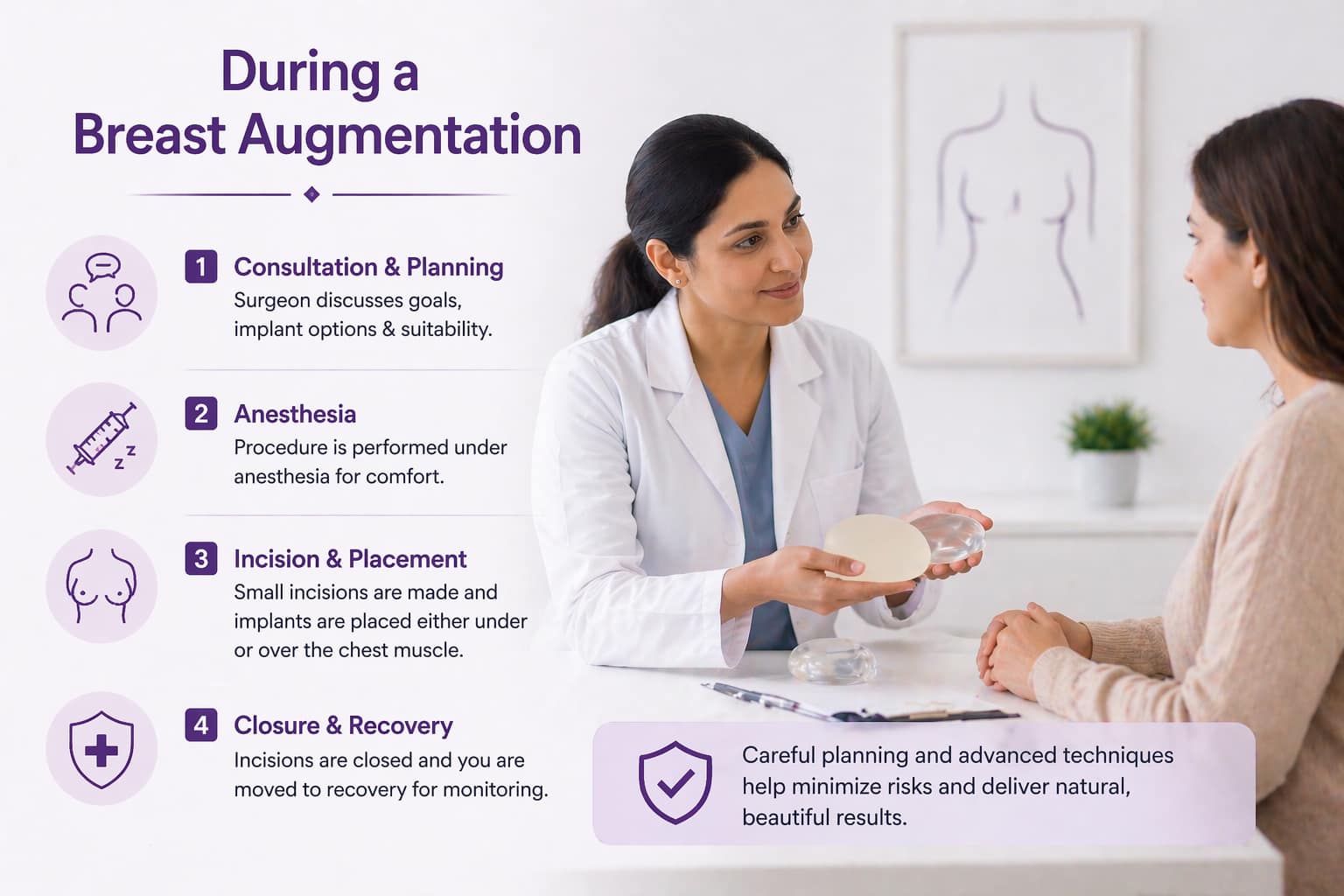
What Do They Do During a Breast Augmentation?
During a breast augmentation procedure, a surgeon places implants or uses fat transfer techniques to enhance the breast size and contour. The process is carefully planned based on the patient’s body type, preferences, and desired outcome.
Here’s a simple breakdown of what happens:
- Consultation and planning
The surgeon discusses expectations, implant options, and overall suitability. - Anesthesia
The procedure is performed under anesthesia, so the patient does not feel pain during surgery. - Incision and placement
Small incisions are made, and implants are placed either under or over the chest muscle. - Closure and recovery
The incisions are closed, and the patient is moved to recovery for monitoring.
The entire process is designed to minimize breast augmentation risks while achieving natural-looking results.
Is It Painful to Get a Breast Augmentation?
One of the most common concerns is about breast augmentation pain. The good news is that the procedure itself is not painful because it is performed under anesthesia.
After surgery, patients may experience:
- Mild to moderate discomfort
- Tightness in the chest area
- Swelling and soreness
This level of breast augmentation pain is usually temporary and manageable with medication and proper care. Most patients find that discomfort improves significantly within the first few days.
Following post-operative instructions plays a key role in reducing breast augmentation pain and ensuring a smoother recovery.
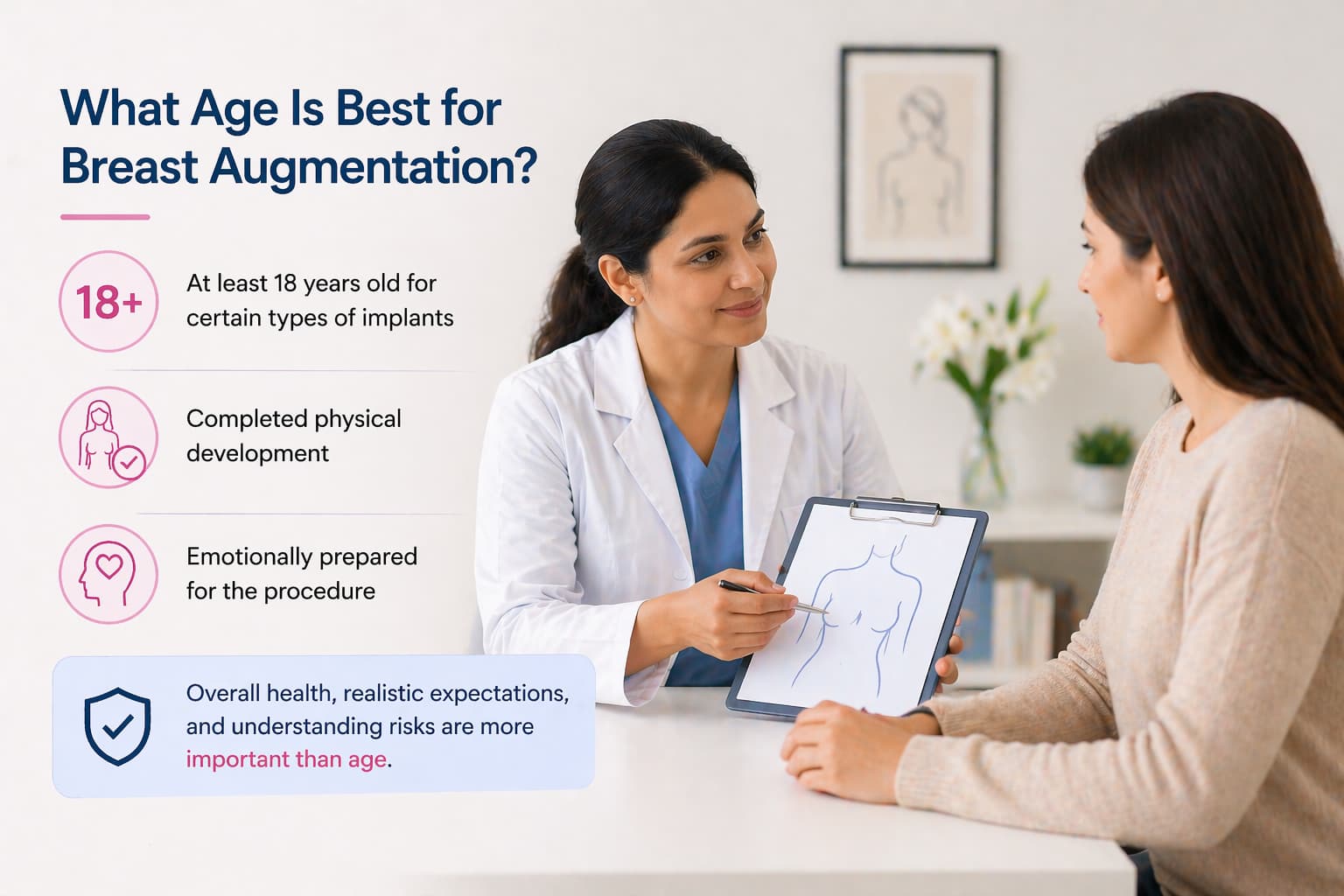
What Age Is Best for Breast Augmentation?
There isn’t a single “perfect” age for this procedure, but there are general guidelines to consider. Most surgeons recommend that patients:
- Are at least 18 years old for certain types of implants
- Have completed physical development
- Are emotionally prepared for the procedure
Beyond age, overall health and realistic expectations are more important factors. Understanding both breast augmentation risks and long-term outcomes helps individuals make informed decisions at any stage of life.
Understanding Breast Augmentation Risks
Like any surgical procedure, there are some breast augmentation risks to be aware of. However, these risks are generally low when the procedure is performed by an experienced and qualified surgeon.
Some possible risks include:
- Infection
- Swelling or bruising
- Implant-related complications
- Temporary discomfort
Most of these breast augmentation risks are uncommon and can be managed effectively when detected early. Choosing the right surgeon and following medical advice greatly reduces the chances of complications.
Recovery and What to Expect
Recovery is an important part of the process. While breast augmentation pain may be noticeable in the initial days, it gradually decreases as healing progresses.
Typical recovery includes:
- Rest during the first few days
- Wearing support garments as advised
- Avoiding heavy activities for a few weeks
- Gradual return to normal routine
Patients who follow proper care instructions often experience a smooth recovery with minimal breast augmentation risks.

Final Thoughts
Breast augmentation is more than just a cosmetic procedure it’s a personal choice that can enhance both appearance and confidence. Understanding what happens during the surgery, along with awareness of breast augmentation risks and breast augmentation pain, helps set realistic expectations.
With the right surgeon, proper planning, and good aftercare, most patients achieve satisfying and long-lasting results. Taking the time to understand every aspect of the procedure ensures a safer experience and a more confident decision.
FAQs
1. What is done in breast augmentation?
It involves placing implants or transferring fat to enhance breast size and shape.
2. Is breast augmentation painful?
The procedure itself is not painful, but mild discomfort may occur during recovery.
3. Are breast augmentation risks high?
No, risks are generally low when performed by experienced professionals.
4. How long does recovery take?
Most patients recover within a few weeks.
5. What age is suitable for breast augmentation?
Usually 18+ years, depending on the type of procedure and individual health.